
Kajabi review: Kajabi is a premium all-in-one business platform for coaches, course creators, consultants and experts who want to build, market and sell digital products from one place. It combines online courses, coaching programs, memberships, communities, websites, landing pages, email marketing, funnels, checkout, automations and affiliate tools into a single connected system.
Kajabi is not the cheapest option, but that is not really what it is trying to be. Its appeal is that it feels polished, cohesive and business-ready. Instead of stitching together several separate tools for content delivery, marketing and payments, Kajabi gives creators a cleaner way to run the full customer journey under one roof.
Kajabi Review: What Does It Do?
Kajabi is built for knowledge-based businesses. Its core purpose is to help creators package what they know, sell it online and deliver it through a polished customer experience. The platform supports:
- Online courses
- Coaching programs
- Memberships and communities
- Digital products and downloads
- Websites and landing pages
- Email marketing and automations
- Funnels, checkout pages and offer flows
- Affiliate programs and customer monetization tools
This makes Kajabi broader than a pure course platform like Thinkific, while remaining more creator-focused than platforms built primarily around agency CRM workflows, such as GoHighLevel.
For users comparing broader funnel and all-in-one marketing tools, see our guide to the best sales funnel software.
Kajabi Review: What Stands Out
Kajabi’s biggest advantage is cohesion. The platform does not feel like a random collection of tools bolted together. Courses, communities, offers, pages, emails and checkouts are designed to work within the same business system, which makes the day-to-day experience cleaner than managing several disconnected apps.
Creators can build a product, create a landing page, set up a checkout, add an upsell, send email campaigns, automate follow-up and deliver access from one dashboard. For many serious creators, that level of integration matters more than saving money on individual subscriptions.
Kajabi’s product pages position it as a platform for building courses, coaching programs, communities and digital products while handling marketing, checkout and delivery in the same system. See Kajabi’s course platform overview.
Kajabi Review: Courses, Coaching and Digital Products
Kajabi is especially strong for creators who want to sell expertise-based products. Courses are easy to structure, lesson content is presented in a polished way and creators can combine learning products with community access, coaching offers or recurring memberships.
Typical product formats include:
- Self-paced online courses
- Cohort-based programs
- Group or one-to-one coaching offers
- Paid memberships
- Private communities
- Digital downloads and resources
That breadth makes Kajabi a strong fit for creators whose business model goes beyond a single standalone course. A coach, for example, can sell a flagship course, add a community, offer recurring coaching and use email automations to nurture buyers into higher-value offers.
Kajabi Review: Funnels and Pipelines
Kajabi includes funnel-building functionality through its Funnels system, previously known as Pipelines. These funnels help users connect landing pages, opt-in forms, email sequences, checkout pages and post-purchase steps into one guided customer journey.
Funnels can be used for:
- Lead magnet campaigns
- Webinar registration flows
- Product launches
- Course sales pages and checkout flows
- Upsell and post-purchase sequences
Kajabi’s funnel tools are easier to use than highly technical automation systems, while still being powerful enough for most creators. They are particularly effective when combined with Kajabi’s built-in email marketing and checkout system.
The current pricing page states that funnels are included across all plans, with unlimited funnels listed in the plan comparison. See Kajabi’s pricing and feature comparison.
Kajabi Review: Checkout, Upsells and Revenue Tools
Kajabi has become more serious about commerce and checkout optimization. Creators can sell through one-time payments, subscriptions, payment plans and free trials, while also using upsells, downsells and order bumps to increase average order value.
These tools matter because Kajabi is not just trying to host digital products. It is trying to help creators monetize them effectively. A course seller can add an order bump at checkout, present a post-purchase upsell and automatically move buyers into the right email or delivery sequence.
Kajabi’s commerce updates also include a redesigned upsell experience and expanded checkout controls. See Kajabi’s upsells overview.
Kajabi Review: Email Marketing and Automations
Kajabi includes native email marketing, so users do not need to connect a separate email service to run basic campaigns, product promotions and nurture sequences. Emails can be sent as one-off broadcasts or built into multi-step campaigns tied to user behaviour.
Its automation features can be used to:
- Tag users after they buy or submit a form
- Trigger sequences after opt-ins or purchases
- Send follow-up based on product engagement
- Move contacts between campaigns as they progress
- Support cart recovery and post-purchase flows
Kajabi’s automations are easier to use than the deep logic found in more CRM-heavy systems, but that simplicity is part of the appeal. For most course creators and coaches, Kajabi offers enough automation power without making the system feel overly technical.
Advanced automations and webhooks are listed in Kajabi’s current plan comparison, with availability expanding on higher plans. See Kajabi’s plan comparison.
Kajabi Review: Communities and Coaching
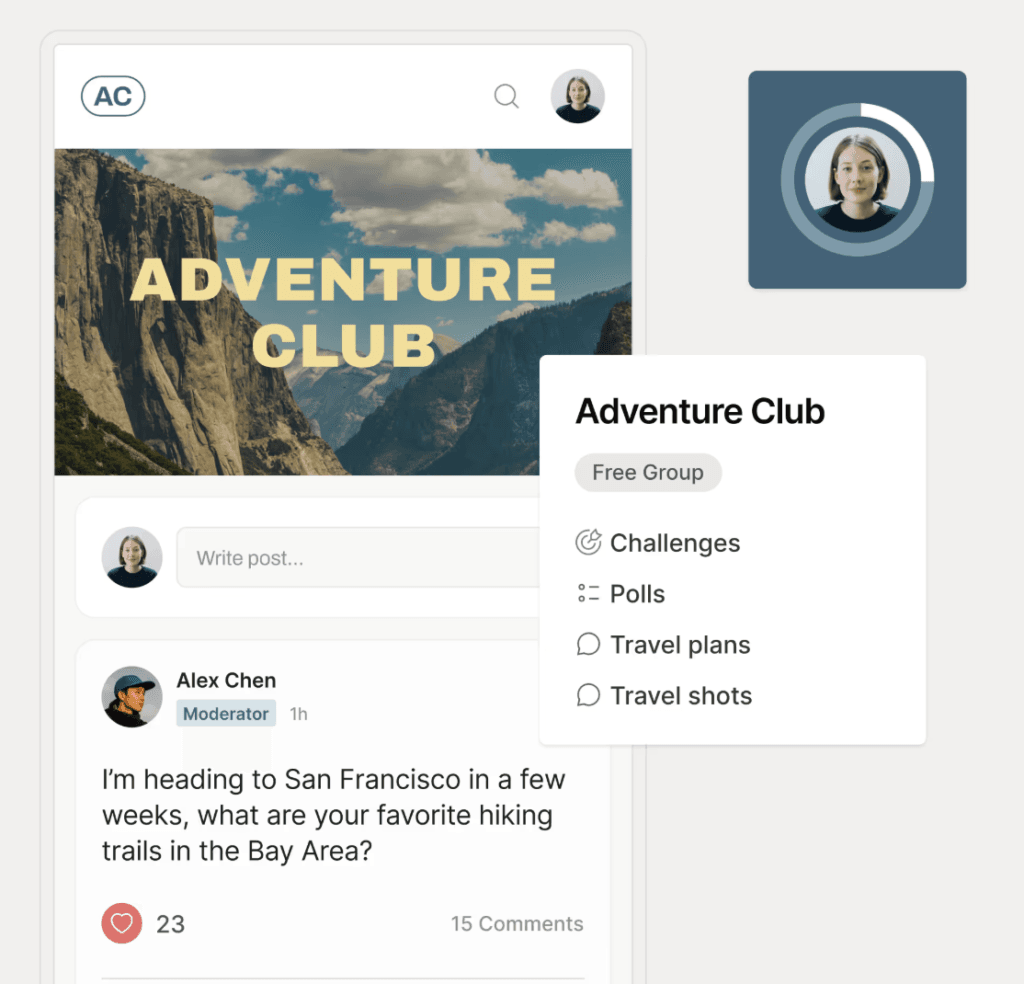
Kajabi’s Communities feature gives creators a built-in space for member interaction, conversation and ongoing engagement. It is designed for businesses that want more than a static course library and need a way to keep customers connected after they buy.
Communities can support:
- Paid membership groups
- Course discussion spaces
- Coaching communities
- Ongoing accountability and retention programs
Kajabi’s community positioning is now much stronger than it used to be, with the company emphasizing engagement, retention and monetization inside the platform. See Kajabi Communities.
For coaching businesses, Kajabi can also support client programs, payments, scheduling-related workflows and the surrounding marketing funnel. It is not a dedicated coaching operations platform in the mould of CoachAccountable, but for many creators it is more than enough when paired with Kajabi’s products, offers and email tools.
Kajabi Review: Affiliate Program Tools
Kajabi includes affiliate program tools for creators who want partners, customers or collaborators to refer new buyers. The system supports tracking, flexible payouts and affiliate performance reporting, helping businesses turn referrals into a structured acquisition channel.
Kajabi refreshed its affiliate experience in April 2026, making the program-management workflow more flexible and data-rich. See Kajabi’s affiliate program update.
Affiliate program availability depends on the plan. Kajabi’s current pricing comparison lists Affiliate Programs as part of the plan feature grid, with availability tied to higher tiers rather than the lowest entry plan. Check Kajabi’s latest pricing table.
Kajabi Review: Pricing
Kajabi’s pricing changed in 2026 and now includes four main plans: Starter, Basic, Growth and Pro. The prices below are Kajabi’s standard public rates at the time of writing, before any limited-time promotions.
- Starter — $89/month or $71/month billed annually: Includes 1 product, 250 contacts, 1 website, 1 community and 2 admin users.
- Basic — $179/month or $143/month billed annually: Includes 5 products, 2,500 contacts, 1 website, 1 community and 2 admin users.
- Growth — $249/month or $199/month billed annually: Includes 50 products, 25,000 contacts, 1 website, 1 community and 11 admin users.
- Pro — $499/month or $399/month billed annually: Includes unlimited products, 100,000 contacts, 3 websites, 3 communities and 26 admin users.
Kajabi often runs introductory promotions, so the amount shown to new customers may be lower than the standard rates above. However, those offers can change, so it is safer to compare plans based on the base pricing and then check the current promotion before subscribing.
One important pricing detail: Kajabi’s newer plans now show third-party payment provider fees if you process payments through an external provider rather than Kajabi Payments or PayPal. The current pricing table lists these as:
- Starter: 5%
- Basic: 2%
- Growth: 1%
- Pro: 0.5%
These fees exclude PayPal and Kajabi Payments and are separate from normal payment processing costs. Kajabi Payments rates are also shown on the pricing page and currently range from 2.9% + $0.30 on lower plans to 2.7% + $0.30 on Pro, subject to country and provider details. See Kajabi’s official pricing page.
Who Is Kajabi Best For?
Kajabi is best suited to creators and experts who want a premium, unified system for building and selling digital knowledge products. It is particularly strong for:
- Course creators selling premium programs
- Coaches offering digital products, communities and recurring support
- Consultants packaging expertise into structured offers
- Membership businesses that need content, email and community together
- Creators who value polish, reliability and fewer integrations over the lowest price
It is less compelling for users who only need a simple course host or who are highly price-sensitive. In those cases, Thinkific may be a better education-first option, while Systeme.io may appeal more to users who want cheaper funnels and marketing tools.
Kajabi Review: Final Verdict
Kajabi remains one of the strongest all-in-one platforms for creators who want to run a serious knowledge business without assembling a messy software stack. Its combination of products, funnels, email, checkout, communities, automations and affiliate tools gives it a level of cohesion that many competitors struggle to match.
The downside is cost. Kajabi is expensive, and the newer third-party payment provider fees make the pricing structure worth examining carefully before signing up. It is not the best fit for every beginner or every budget.
But for creators, coaches and experts who want a polished, scalable platform that feels built for selling and delivering premium digital experiences, Kajabi is still one of the best options on the market.


